AnywhereDolphin™

Search Blog:
Share Article:


Braces or Invisalign? How Orthodontists Help You Decide
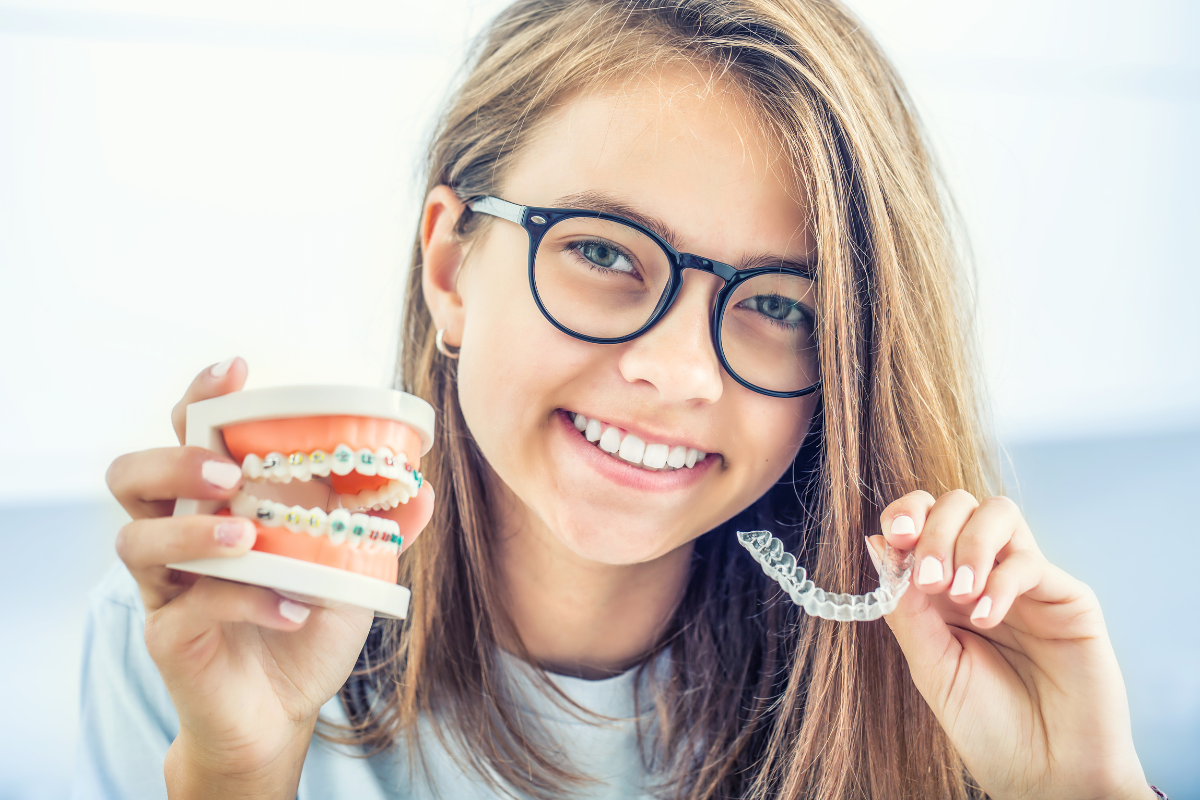
Choosing a path to a straighter smile can feel like a bigger decision than it needs to be. Some patients walk into our office already set on one option. Others have no idea where to start and just know their teeth need help. Both are normal starting points. At Bateman Orthodontics, we sit down with every patient, look at their bite, their goals, and their daily life, then help them land on the treatment that actually fits. Whether you are weighing invisalign in rochester or looking into braces in rochester, the right answer depends on more than personal taste. It depends on your teeth.
This guide breaks down how each treatment works, what an orthodontist looks for when making a recommendation, and how to think through the decision yourself before your first visit.
What Braces and Invisalign Actually Do
Both braces and clear aligners move teeth by applying steady, gentle pressure over time. That part is the same. What differs is how that pressure gets applied and how much control it gives your orthodontist over tricky movements.
Metal or ceramic braces use brackets bonded to each tooth, connected by a wire that gets adjusted at regular visits. Because the brackets stay on the tooth the whole time, braces can manage almost any bite problem, from simple crowding to more complex rotations.
Invisalign uses a series of clear, removable trays instead. Each tray is worn for one to two weeks before switching to the next, and each one shifts teeth just slightly further than the last. Patients like that trays come out for eating and brushing, and that they stay far less noticeable day to day.
How Traditional Braces Work
Braces have been refined for decades, and today’s versions are smaller and more comfortable than what patients remember from their own childhood. Ceramic brackets blend closer to natural tooth color, and wires now apply lighter, steadier force with fewer painful adjustments.
Braces make sense for patients with larger corrections to make. Severe crowding, significant gaps, or bite problems tied to jaw alignment usually respond better to braces, since the brackets never come off and movement never pauses. Families with younger patients also tend to lean toward braces, since there is no tray to lose or forget to wear. For many families researching braces in rochester, this reliability is exactly what tips the decision.
How Invisalign Works
Invisalign starts with a digital scan of your teeth, which your orthodontist uses to map out the entire treatment before you wear a single tray. You get to see a rough preview of your final result before you commit, which many patients find reassuring.
Because the trays are removable, Invisalign fits well with active lifestyles, sports, and jobs that involve a lot of public speaking or photos. Adults tend to gravitate toward this option for that reason. The tradeoff is discipline. Trays need to stay in for about twenty to twenty two hours a day to keep treatment on schedule, and skipping that adds time to the process. Patients asking about invisalign in rochester often want to know if their case even qualifies, and that decision comes down to how much movement their teeth need and how consistent they expect to be with wear time.
Braces vs Invisalign: A Side by Side Look
| Factor | Traditional Braces | Invisalign |
| Visibility | Noticeable, though ceramic options blend in more | Nearly invisible |
| Removable | No, fixed to teeth | Yes, comes out for meals and brushing |
| Best for | Complex bites, severe crowding, younger patients | Mild to moderate cases, adults, teens with discipline |
| Diet restrictions | Some foods to avoid | None, since trays are removed to eat |
| Daily care | Brushing around brackets and wires | Brushing trays and teeth separately |
| Average treatment time | Varies by case, often similar to Invisalign | Varies by case, often faster for mild cases |
| Office visits | Every 4 to 8 weeks for adjustments | Fewer in person visits, more tray changes at home |
This chart gives a general picture, but every mouth is different. Plenty of patients who start out searching for an orthodontist rochester families recommend end up choosing a treatment they had not even considered, once the exam shows what their bite actually needs.
How an Orthodontist Actually Helps You Decide
A good orthodontist does not just ask which option you like better. The process usually looks like this.
Digital scans and X-rays
These show how your teeth sit under the gum line and reveal problems that are not visible from the surface, like impacted teeth or root position.
A full bite evaluation
Your orthodontist checks how your upper and lower teeth meet when you bite down. Overbites, underbites, and crossbites all change which treatment will work best.
A conversation about your life
Musicians, athletes, and people with demanding social or professional schedules often get steered toward one option over another simply because it fits how they live.
A realistic timeline
Some cases move faster with braces, others move faster with Invisalign. Your orthodontist will walk you through what to expect month by month, not just at the finish line.
This is the part patients tend to skip when researching on their own. Online quizzes and general articles cannot look inside your mouth. An orthodontist rochester families trust will combine imaging, hands on exam, and your own goals into one clear recommendation, rather than a guess based on pictures alone.
Meet Our Orthodontists
Every recommendation at our office comes from doctors who have spent their careers focused on nothing but orthodontics.
Dr. Jeremy Bateman earned his Bachelor of Arts in Biological Sciences and his Master of Science in Oral Sciences from SUNY Buffalo, then completed his Doctorate of Dental Medicine at Temple University. He finished his orthodontic training at Wilford Hall Medical Center, graduating as valedictorian of his dental school class on a military scholarship. Dr. Bateman served seven years in the U.S. Army, reaching the rank of Major, with time spent as a Staff Orthodontist and Orthodontic Mentor at Womack Army Medical Center. He now lives in Rochester with his family and still teaches at a local dental assisting program between patient visits.
Dr. Ben Levenson studied chemistry at Syracuse University, graduating with honors, before earning his dental degree from the University of Maryland School of Dentistry, where he graduated near the top of his class. He was elected to the Omicron Kappa Upsilon National Dental Honor Society and later completed his orthodontic certificate at the Eastman Institute for Oral Health, right in Rochester. Dr. Levenson is a Board Certified Orthodontist through the American Board of Orthodontics and holds memberships with the American Association of Orthodontists, the Northeast Society of Orthodontists, and the New York State Dental Association.
Together, Dr. Bateman and Dr. Levenson lead treatment planning across all three of our offices, in Brockport, Greece, and Irondequoit, so patients get the same level of care no matter which location they visit.
What Our Patients Say
Reviews from real patients often explain a decision better than any chart can.
Our Invisalign Review –
“We’re very pleased with our experience at your Greece location. Olivia chose Invisalign, she’s almost completed her treatment, and very happy with the results so far. There’s never been a problem with scheduling or rescheduling her appointments, and there are plenty of after school and weekend appointments available. We had several consults in the Monroe county area as cost was also a factor. We chose Dr.Fox as our Orthodontist,,, we absolutely made the right choice. Honestly, the technicians are wonderful with her, always on time, and we’re in and out in minutes. I highly recommend this office, it is comfortable, clean, affordable, great parking, and accommodating. They’re professional, kind, responsible, caring, knowledgeable, and courteous. Thank you! We are very happy clients.” 🦷😁🎉🫶”
★★★★★ — (Denise Christine)
Our Braces Review –
“We Love Bateman Orthodontist! Dr. Fox is amazing! We are on the 3rd person in our family to get brace.”
★★★★★ — (Beckie Faulknor)
Feedback like this shows why the recommendation matters as much as the treatment itself. A confident answer, backed by a real exam, tends to lead to better results and fewer surprises along the way.
Questions to Bring to Your Consultation
Before your first visit, it helps to think through a few things.
- How much time can you realistically commit to wearing trays each day, if Invisalign is on the table?
- Do you have a bite issue, not just crowding, that might need bracket level control?
- Is your schedule flexible enough for regular adjustment visits, or do you need fewer in person appointments?
- Are you treating a child, teen, or yourself, and does age change what will work best?
Bringing these questions in gives your orthodontist a clearer picture of your priorities, not just your teeth.
Making the Final Call
There is no universal winner between braces and Invisalign. The right choice depends on your bite, your habits, and how involved you want to be in your own daily care. What matters most is getting an honest, exam based recommendation instead of guessing from a chart online. Patients across Brockport, Greece, and Irondequoit come to us with the same question every week, and every answer starts with a real look at their teeth, not a one size fits all script.
If you have been comparing braces against invisalign in rochester and still are not sure, a consultation will settle it quickly. For families and adults searching for an orthodontist rochester can count on for a straightforward answer, that first exam is the best next step, and it is one our team is ready to walk you through.
Frequently Asked Questions
1. How do I know if my case is too complex for clear aligners?
Your orthodontist will check for issues like severe rotations, bite misalignment, or missing teeth space that may respond better to fixed brackets. A scan and exam usually answer this within one visit.
2. Does treatment hurt more with braces than with aligners?
Both can cause mild soreness for a day or two after an adjustment or a new tray. Most patients describe it as pressure rather than sharp pain, and it fades quickly.
3. Can adults still get good results with braces?
Yes. Age does not limit how well teeth respond to treatment, as long as the gums and jawbone are healthy. Many adults choose braces for complex corrections that aligners cannot manage as efficiently.
4. What happens if I lose or forget to wear my aligner trays?
A missed tray here and there is not a crisis, but frequent lapses will extend your treatment timeline. Your provider can order a replacement tray if one goes missing.
5. How often will I need to see my orthodontist during treatment?
Braces typically need adjustments every four to eight weeks. Aligner check ins are often spaced out further, since most of the movement happens between visits.
6. Is one option more affordable than the other?
Cost varies by case complexity more than by treatment type. A consultation will give you an accurate estimate based on your specific needs, not a generic price range.
7. Can I switch from one treatment to the other partway through?
In some cases, yes, though it depends on how far treatment has progressed and what your bite still needs. This is worth discussing directly with your provider if your circumstances change.
8. Do children need a different approach than teens or adults?
Younger patients sometimes benefit from early evaluation to catch developing bite problems before all permanent teeth arrive, which can simplify treatment later on.
Ready to Find Your Fit?
The only way to know for certain which treatment is right for you is a real exam, not a guess. Schedule a consultation with Bateman Orthodontics today at one of our Brockport, Greece, or Irondequoit offices, and let our team map out a plan built around your smile, your schedule, and your goals.
Tags:
Posted on August 22, 2026